How to Choose the Right Dock Door for Your Business Needs?
Choosing the right dock door can significantly impact your business operations. According to a report by the Warehousing Education and Research Council (WERC), nearly 75% of logistics professionals believe that dock doors directly influence loading efficiency. Selecting the appropriate dock door involves understanding your unique logistical needs, traffic patterns, and product types.
Expert Mark Johnson states, "The right dock door is not just a passageway; it's an integral part of supply chain efficiency." This highlights the critical role of dock doors in warehouse and distribution center performance. For instance, a high-traffic facility may require larger or faster-acting doors to minimize wait times.
Consideration of factors like insulation, safety features, and automation options is vital. Not every dock door suits every environment. Reflect on past choices; sometimes, changing the door type can yield better efficiency. Without the right dock door, potential workflow disruptions may arise, urging businesses to reevaluate their options.

Understanding Different Types of Dock Doors Available for Businesses
When selecting the right dock door for your business, consider the various types available. Each type serves specific functions.
For instance, a roll-up door is great for space efficiency. It opens vertically, allowing for easy access in tight spaces.
A fold-up door might suit larger operations. This type can handle heavy loads and is resilient.
Tips: Assess the space around your dock. Measure the height and width of the area accurately.
Solutions like insulated doors can save energy but may cost more upfront.
Another option is the sliding dock door. This door type is often used in environments where space is limited, but there’s a need for quick access.
Sliding doors, while practical, can be problematic if not maintained. Rust or debris can cause them to jam.
Tips: Regular maintenance is key. Inspect door tracks and latches periodically.
Consider your operational needs carefully. A door best suited for a warehouse might not work for a retail center.
Analyze your workflow to enhance efficiency.
Factors to Consider When Selecting Dock Doors for Specific Needs
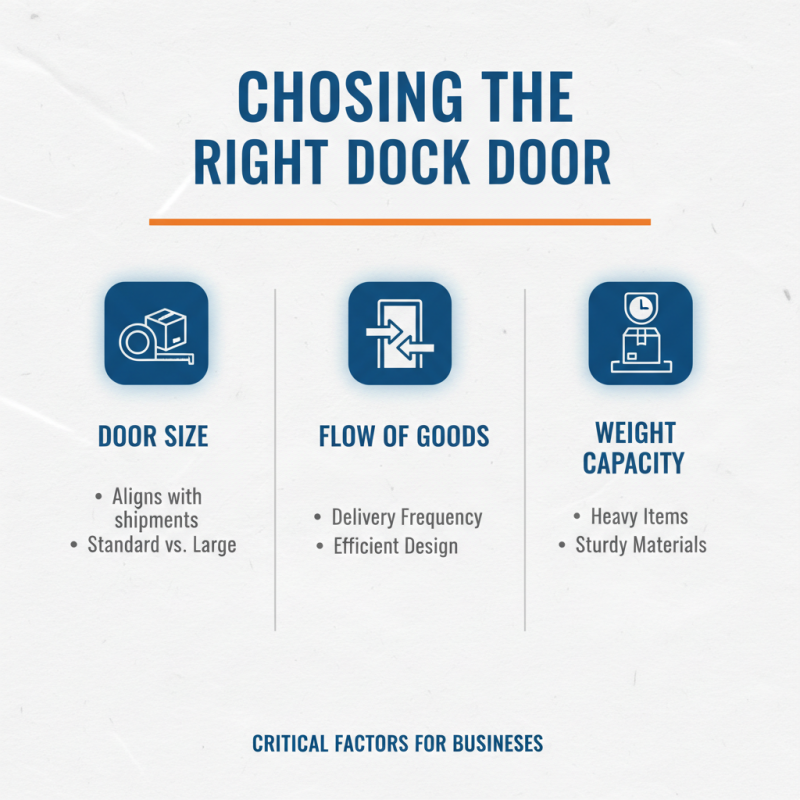
When choosing the right dock door for your business, consider several critical factors. The size of the door must align with your shipping needs. A standard size may not accommodate larger shipments. Assess the flow of goods. Frequent deliveries require efficient designs. Will your dock door handle the weight? Heavy items demand sturdy materials.
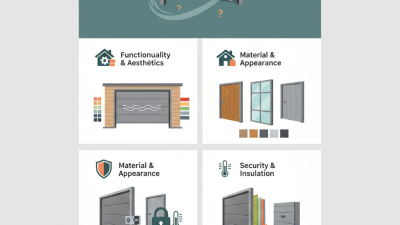
Climate resistance is another vital point. If your facility is in extreme weather zones, durable, insulated doors can protect goods. Think about security too. A door with effective locking systems can prevent theft. Ensure the design meets safety regulations, but also works for your employees.
Evaluate maintenance requirements. Some doors need more upkeep than others. High-maintenance options may lead to unexpected costs. A door that seems perfect might not fit long-term needs. Consider your future projections: will your operation expand? Flexibility can save time and money later. Make careful notes, and reflect on past decisions to avoid repeated mistakes.
Evaluating Load Capacity and Security Features of Dock Doors
Choosing the right dock door involves focusing on load capacity and security features. Evaluating these aspects is crucial for operational efficiency. A report from the Warehouse Equipment Manufacturers Association states that the average load capacity for dock doors ranges from 10,000 to 20,000 pounds. Knowing your company’s needs helps in selecting the proper door type.
Security features are also vital. According to the National Forklift Safety Institute, nearly 25% of dock-related accidents involve inadequate security measures. This highlights the importance of reinforced doors and locking mechanisms. Options like electronic keypads or biometric systems might be beneficial. However, the installation of complex systems requires careful evaluation; they can add costs and maintenance challenges.
Moreover, a lack of thorough analysis can lead to underperformance. For instance, if a door cannot handle peak loads, it may lead to delays. Regular assessments of load requirements and security capabilities help in addressing potential issues. Ensuring the right door aligns with current and future business needs is essential for preventing hazards and enhancing overall productivity.
Load Capacity and Security Features of Dock Doors
Assessing Climate and Weather Conditions Impacting Dock Door Choice
When choosing the right dock door, you must consider climate and weather conditions. Heavy rain can flood loading areas. In colder regions, ice buildup can hamper efficiency. High winds can damage improperly secured doors. Evaluating local weather patterns is essential.
Different materials withstand varying climates. Steel doors may rust in humid areas, while insulated doors help keep temperatures stable. Think about the average seasonal temperature. You might need more insulation if winters are harsh. Examine past weather data to inform your choices.
Additionally, unforeseen weather events can occur. Storms can disrupt supply chains. Regular inspections are necessary to maintain door integrity. Ensure that your dock door can adapt to changing conditions. This proactive approach can save time and costs in the long run. Balancing immediate needs with long-term durability is crucial.
Cost-Benefit Analysis of Various Dock Door Options for Your Business
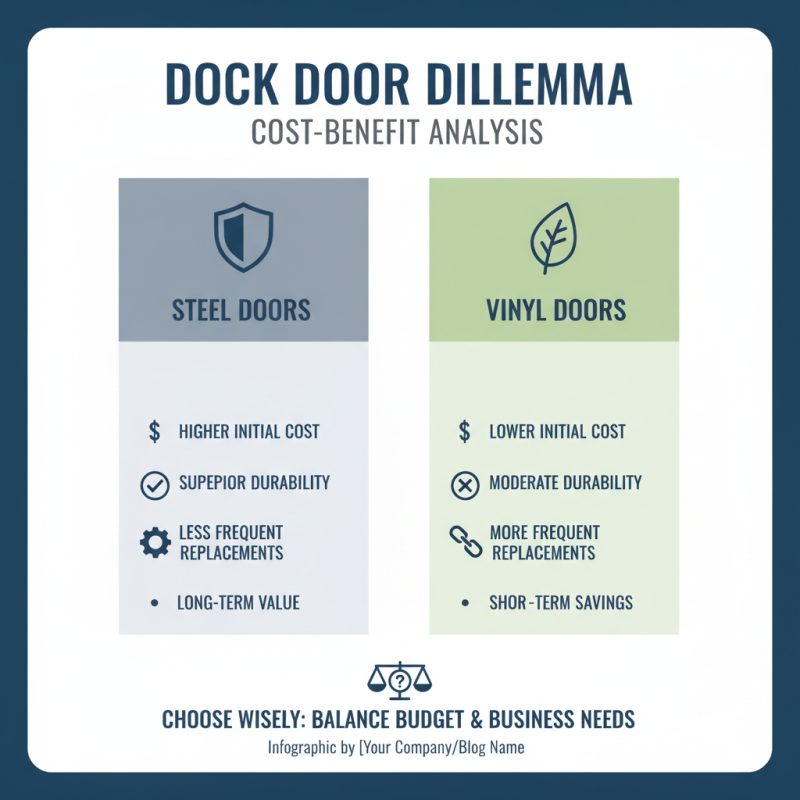
When selecting dock doors for your business, a cost-benefit analysis is essential. Different options come with varying initial costs and long-term benefits. Consider the material of the door. Steel doors may offer durability but can be more expensive. Vinyl doors tend to be more affordable and may sufficiently meet your needs. However, cheaper options might require more frequent replacements.
Evaluate the installation and maintenance costs as well. Some doors require specialized installation, which increases upfront spending. Others are easier to set up, saving you money in labor costs. Maintenance is another factor. High-quality doors may cost more initially but can save money over time due to fewer repairs.
You might find a choice that’s less popular yet fits your budget perfectly. This could be a simpler design or lesser-known materials. Reflect on your business's specific needs. Do you need energy efficiency, security, or easy access? Balancing these factors can lead to a more informed decision, even if it requires some trial and error.