NJ & NYC Commercial & Residential Garage Door
Choosing a dock door manufacturer is a practical decision with long-term consequences. The right system can support safer loading, smoother workflows, and more dependable building performance. The wrong fit may create recurring maintenance demands or slow busy shipping schedules.
Global buyers face a wide range of options. Manufacturers differ in product design, customization, service coverage, and experience with demanding industrial environments. A high-volume distribution center may need rapid cycling and strong impact resistance. A food-processing facility may place greater emphasis on insulation and cleanable surfaces. Details matter.
This guide examines seven dock door manufacturers serving buyers across international markets. It considers product range, engineering capabilities, durability, support, and suitability for different applications. These factors offer a useful starting point, not a substitute for checking specifications and service terms directly with each supplier.
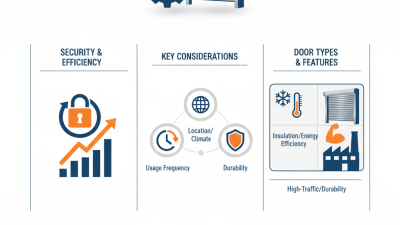
Look closely at the opening size, operating frequency, climate, and available maintenance resources. Ask how replacement parts are sourced and what technical support is available after installation. Good questions prevent expensive surprises.
No manufacturer is ideal for every site. Claims can also be difficult to compare when testing methods or warranty conditions differ. Buyers should verify performance details and request project references where possible. Even then, a reference may not match your facility exactly.
A dock door is more than a barrier between the warehouse and the outside. It is part of a working system, shaped by traffic, weather, equipment, and people. The following overview helps narrow the field and identify which manufacturers may deserve closer review.
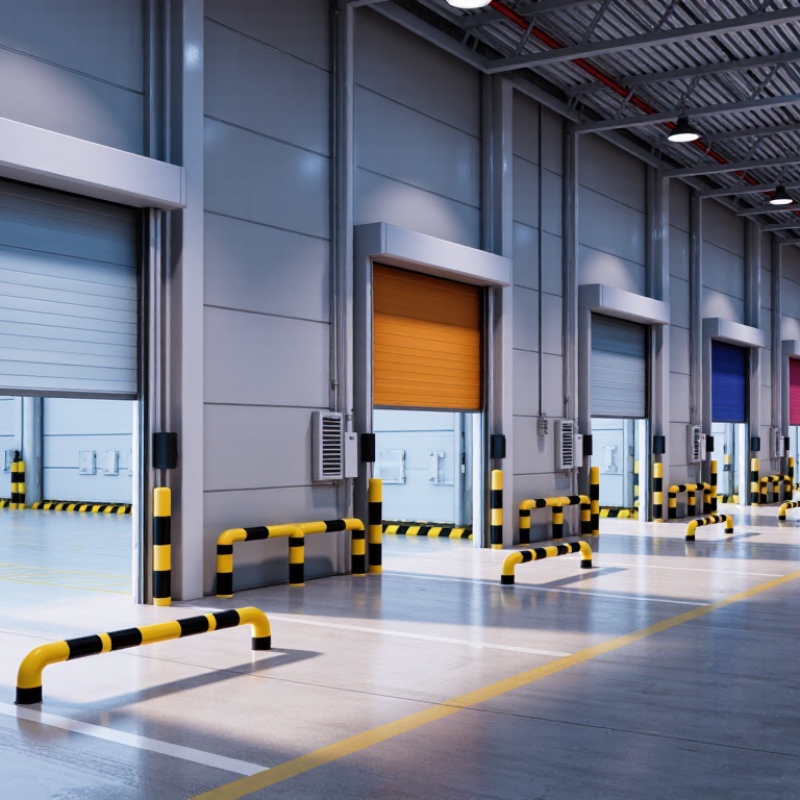
A dock door is the movable barrier between a warehouse interior and a loading bay. It opens to let people, forklifts, and goods pass, then closes to help limit drafts, rain, dust, and temperature changes. In daily operations, it is part of a larger system that includes the dock leveler, vehicle restraint, seals, and controls. A door may look simple. Its fit and movement matter.
Common types include sectional doors, which travel upward along ceiling tracks, and rolling steel doors, whose slats coil above the opening. High-speed fabric doors are designed for frequent cycles, while insulated doors can help maintain more stable indoor conditions. Each type suits different traffic patterns, clearances, and environmental needs. For example, a busy distribution bay may need fast opening cycles, while a cold-storage area may place greater emphasis on insulation and a tight seal. The right choice depends on actual site conditions, not just a catalog description.
During loading, the door coordinates access between the building and a waiting trailer. A clear opening helps forklifts move pallets safely, while reliable closing can reduce exposure to weather and help manage energy loss. Fit matters. Poor alignment, damaged panels, or worn seals can interrupt work and create avoidable maintenance. In practice, even a well-specified door may perform poorly if operators receive little training or inspections are delayed. That part is easy to overlook.
Dock doors provide a controlled opening between a warehouse and a trailer, supporting safer, faster, and more weather-resistant loading operations. The chart compares representative clear-opening dimensions commonly specified for major dock door types; actual sizes vary by facility, vehicle, and manufacturer.
How to read the chart: Sectional and vertical-lift doors are commonly selected for general-purpose loading bays, while rolling steel and high-speed fabric doors are often used where durability or frequent cycling is important. The listed dimensions are representative industry-standard sizes in feet.
7 Best Dock Door Manufacturers for Global Buyers
Compare 7 Manufacturers by Product Range, Global Reach, and Support
For global buyers, the best dock door manufacturer is rarely the cheapest. The stronger choice usually combines loading doors, dock levelers, shelters, vehicle restraints, and safety controls. Manufacturer 1 offers the broadest package. Manufacturer 2 focuses on insulated doors and cold-chain facilities. Manufacturer 3 serves high-volume warehouses with automated controls. Manufacturers 4 and 5 provide flexible regional production. Manufacturer 6 is stronger in replacement parts, while Manufacturer 7 emphasizes engineering support. This comparison follows buyer experience, not advertising claims.
Global reach also needs careful checking. A factory may export widely but lack local technicians. The 2024 MHI Annual Industry Report reported that 55% of supply-chain leaders planned to increase technology investment. That trend raises demand for connected doors and faster service. However, digital features are not enough. Buyers should verify spare-part locations, response times, language support, and installation partners in each target country. Market coverage looks impressive on paper. Service can still disappoint.
Tips: Request a five-year parts plan and a sample service agreement. Compare tested wind resistance, cycle ratings, safety sensors, and cold-temperature performance. Ask for references from facilities with similar traffic. I would also inspect the control panel personally; small interface problems become costly during night shifts. No ranking stays permanent. Local labor quality and port access can change the result. Reports guide decisions, but site evidence matters more.
| Rank | Anonymous Manufacturer | Core Product Range | Dock Door Types | Global Reach | Customization Capability | Technical Support | Best Fit |
|---|---|---|---|---|---|---|---|
| 1 | Manufacturer A | Dock levelers, loading-bay doors, dock shelters, vehicle restraints, bumpers, controls, and safety accessories | Sectional overhead, rolling, high-speed, and insulated industrial doors | Established presence across North America, Europe, and Asia-Pacific | High Dimensions, finishes, controls, and safety options can typically be configured |
Distributor network, installation guidance, spare parts, and preventive maintenance support | Large distribution centers and multinational warehouse projects |
| 2 | Manufacturer B | Dock levelers, dock seals, shelters, vehicle restraints, lifts, doors, and loading-dock safety systems | Sectional, vertical-lift, rolling, and high-performance doors | Strong coverage in North America with international project capability | High Solutions can be adapted for traffic volume, climate, and building layout |
Field service, operator training, repair programs, and replacement components | High-traffic logistics, manufacturing, and cold-chain facilities |
| 3 | Manufacturer C | Industrial doors, dock platforms, shelters, bumpers, controls, and warehouse access equipment | Sectional, folding, sliding, rolling, and rapid-roll doors | Broad European coverage with export and project support in other regions | High Options commonly include insulation, glazing, finishes, and automation |
Technical documentation, local partners, commissioning, and service contracts | European warehouses, factories, and temperature-controlled operations |
| 4 | Manufacturer D | Dock doors, dock levelers, loading-bay enclosures, seals, restraints, and warehouse safety products | Insulated sectional, rolling steel, fabric, and high-speed doors | International availability through regional offices and authorized distributors | Medium to High Suitable for standard and project-specific loading-bay requirements |
Application engineering, installation assistance, manuals, and after-sales service | General industrial, commercial, and third-party logistics facilities |
| 5 | Manufacturer E | Dock levellers, dock shelters, bumpers, wheel guides, vehicle restraints, and access doors | Sectional overhead, rolling, and insulated dock doors | Primarily regional coverage with selected international distribution | Medium Standard configurations are widely available; special projects require engineering review |
Product selection support, installation partners, maintenance parts, and troubleshooting | Small and medium distribution centers seeking integrated dock equipment |
| 6 | Manufacturer F | Dock plates, mechanical and hydraulic levelers, shelters, seals, bumpers, and industrial doors | Rolling, sectional, flexible, and basic insulated doors | Strong domestic distribution with export capability through partners | Medium Good coverage for common dock dimensions and operating conditions |
Dealer support, technical drawings, replacement parts, and basic service training | Cost-conscious facilities and straightforward replacement projects |
| 7 | Manufacturer G | Industrial doors, loading-bay doors, dock shelters, levelers, seals, and safety accessories | Sectional, rolling, sliding, and high-speed fabric doors | Regional manufacturing base with selected overseas sales and distribution | Medium Flexible for standard projects, with customization depending on local engineering capacity |
Distributor-led installation, product manuals, spare parts, and warranty support | Regional warehouses, factories, retail distribution, and replacement installations |
Note: Manufacturer names are intentionally omitted. Product availability, regional coverage, certifications, lead times, and service levels should be confirmed for the buyer’s specific market and project requirements.
7 Best Dock Door Manufacturers for Global Buyers
Assess Loading-Bay Safety Under OSHA 29 CFR 1910.178(g)(1)
Under OSHA 29 CFR 1910.178(g)(1), battery charging installations must remain in designated areas. This rule directly affects facilities using electric forklifts near loading bays. A dock door may appear secure, yet poor charging-area planning can create serious operational risks. During site reviews, I look for clear separation between vehicle traffic, charging equipment, and stored materials. Marked floors, impact barriers, ventilation, and controlled access provide useful evidence of deliberate planning. Still, a checklist alone can miss daily behavior.
Tips
Keep charging stations away from dock edges and pedestrian paths. Use visible signs and floor markings. Inspect barriers after every impact. Confirm that emergency equipment remains reachable. Train operators to report damaged doors, cables, and protective guards immediately.
When comparing seven leading dock door manufacturers, global buyers should examine safety integration, not only panel strength or cycle ratings. Ask whether the door system supports traffic control, interlocks, warning lights, and maintenance access. Request documented testing, installation instructions, and service procedures suited to the facility’s climate. Independent inspection records also improve confidence. One detail is often overlooked: a reliable door cannot correct a badly arranged charging area. Buyers should review the entire loading-bay workflow with a qualified safety professional, then revise controls after observing real shift activity. Expect some weaknesses. That is where meaningful improvement begins.
When comparing the 7 best dock door manufacturers for global buyers, compliance deserves more attention than price. EN 13241 covers industrial, commercial, and garage doors used in European markets. It addresses performance factors such as wind resistance, safety, thermal behavior, and durability. However, compliance depends on the complete door assembly, not only the curtain or panel.
For North American projects, ANSI/DASMA 102 is an important reference for sectional overhead-type doors. Buyers should request current test reports, performance ratings, installation limits, and documented safety features. Check whether the tested configuration matches the proposed dock door. Small changes can matter. Different tracks, seals, operators, or panel weights may affect results.
Ask manufacturers for a Declaration of Performance when EN 13241 applies, along with traceable factory quality records. For ANSI/DASMA 102 projects, confirm the standard edition and the exact product scope. Review cycle ratings, air leakage data, operating speed, and maintenance requirements. A certificate alone is not enough. Site conditions can expose gaps, especially with frequent forklift traffic or uneven floors. I have seen specifications look complete while omitting wind exposure and operator duty cycles. That is an uncomfortable detail, but it deserves attention. A reliable supplier should explain limitations clearly, provide installation training, and support inspections after commissioning. Local code review remains necessary because standards do not replace every regional requirement.
Choosing among seven dock door manufacturers requires more than comparing prices. Buyers should test each supplier against local climate, daily traffic, service capacity, and installation conditions. A door used beside a cold warehouse needs different seals than one exposed to tropical rain and salt air. High-traffic facilities may require faster cycling, stronger hinges, and impact-resistant panels. I have found that small details, such as drainage design and sensor placement, often affect long-term reliability.
Tips: Ask for climate-rated materials, cycle-life data, spare-parts availability, and technician response times. Request installation drawings before signing. Confirm whether local crews understand the floor level, wall structure, and electrical standards. A supplier with strong products may still struggle without dependable regional support. That weakness is easy to miss during remote purchasing.
Service history deserves careful attention. Ask for references from warehouses with similar traffic and weather. Review warranty exclusions, training procedures, and preventive maintenance schedules. Installation should include alignment checks, safety testing, and operator instruction. In my experience, rushed commissioning creates problems that appear months later. The “best” manufacturer is not always the cheapest or most famous. It is the one that fits the site honestly. Some buyers may over-specify equipment, while others ignore future traffic growth. Both mistakes deserve review before final selection.